What bidets taught me about the Stages of Change

Growing up in America, the word bidet meant nothing to me. Hook me to an fMRI, and my brain wouldn't have shown any sign of recognition or increased activity. Nothing there. No reaction. Nada.
Eventually I'd happen upon the word in historical fiction or an account of the long-gone monarchies of Europe. Maybe it was a fancy drinking fountain? Foot washer? Who could know? I certainly didn't and context clues had me guessing.
Then, over a decade ago, I visited my in-laws for the first time. From room to room there were different types of washers — bidets! Some used a handle (am I supposed to shower in this guest toilet?), while others seemed mysteriously built in to the seat. I wanted to hover over it, concerned the device would spring up and shock me.
And on a recent trip to visit them, my brother-in-law gave me a full tour of their new toilet, complete with remote, bidet (of course), seat warmer, and dryer. The bells and whistles scared me off from the idea of ever using it. Too fancy, I deemed. Not to mention it seemed gross.
But something in me held a doubt. Maybe I shouldn't outright dismiss them? Maybe it isn't gross? Maybe much of the world knows something us Americans don't about cleanliness? Maybe this can actually be good for the environment? Maybe I am being stubborn and should contemplate a change?
All these questions signaled room for something different. I was living the Stages of Change Model as originally outlined by Prochaska and DiClemente from the early 80s.
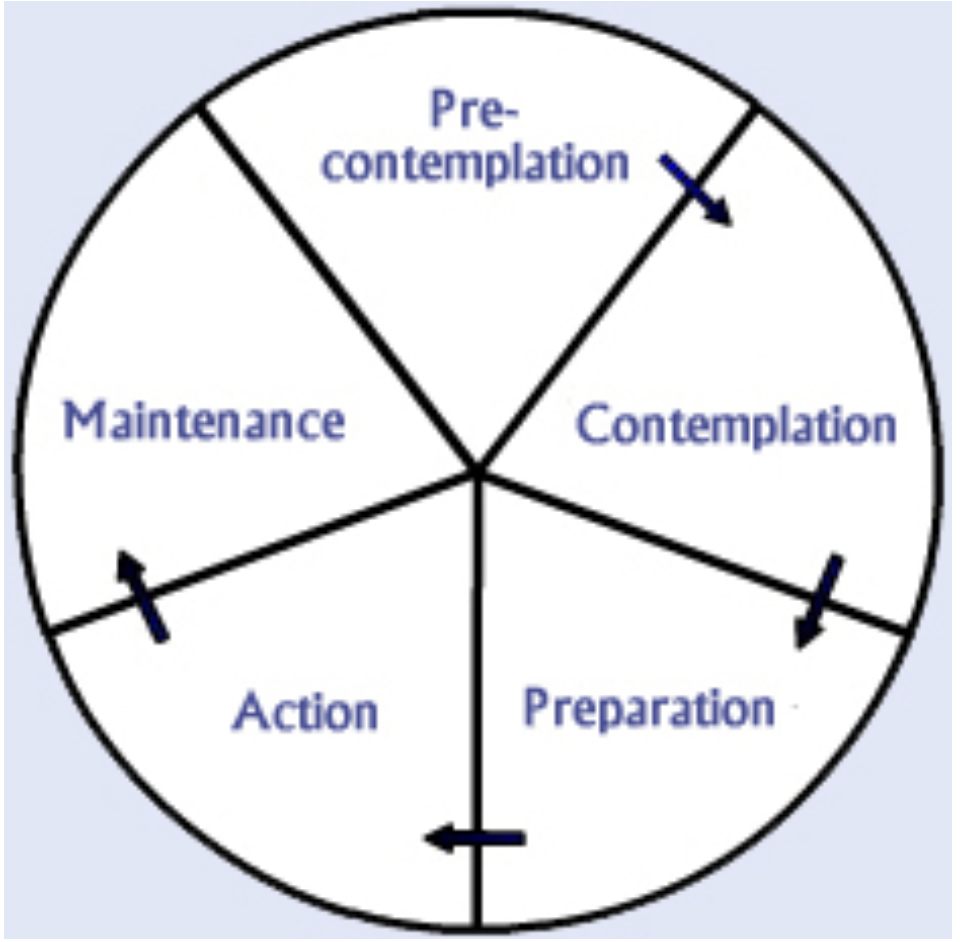
Each step tells of the powerful processes that influence us. The model accounts for reality — most people cycle through these stages multiple times, learning from setbacks, before change sticks. As the preceding image shows, it's typically depicted as a circular chart containing five or six stages (depending on whether "relapse" is included). The stages were initially developed to help with addiction/dependence treatment, but I find it to be a helpful illustration of change for various aspects of life — bidets included.
We don't all start with precontemplation; however, it's best described as a sort of outright denial of change. No way, not me, not interested, don't care what you share. Contemplation allows for doubt and also the possibility for something else. It is rich and highly sought after in psychotherapy. It can lead to moments of productive ambivalence; a workable feeling where change is possible — even if improbable — when we question our assumptions. We might wake up sick, coughing in the morning from smoking too many cigarettes. We might finish a brutal argument with our partner and wonder if this is the right one for us. In my office, I see this moment frequently — someone brings up a concern they've been dismissing for months, testing whether it's safe to wonder if change is possible. And if change becomes more necessary, preparation can occur. In this phase, people typically draw up lists — establishing the to-dos before change and organizing your space/mind/environment for it. If we embrace all this preparation and readiness for change, we might just enter into action and, if continued, maintenance.
Change isn't typically a light switch — flicked on suddenly. It only appears swift from the outside looking in. It's rarely easy, and the resistance and ego challenge is even harder. Think about it, isn't it hard to admit we were wrong about something we believed for years? It often takes repeated exposure and challenge (potentially from others).
So, as I unknowingly moved from bidet-curious to preparation, I asked our AI overlords (Claude AI) a question that would appeal to my values: what's the environmental impact of using one?
"Bidets use about 1/8 gallon of water per use, but producing a single roll of toilet paper requires 37 gallons of water during manufacturing, plus significant tree consumption and chemical processing. Studies show bidets reduce your bathroom’s environmental footprint by 30-50% compared to toilet paper alone. They typically pay for themselves within a year or two from reduced toilet paper purchases."
And in an instant, I started Wirecuttering my way to a new bidet. Thanks, Claude!
A message repeated really does matter. It took a decade of knowing my in-laws and seeing their ways. Over and over again. This repetition can wear down walls — standing firmly against change — and leave us vulnerable (in a good way) to accepting change. Years of pushing back against something I didn't even really understand for reasons I couldn't adequately explain. And now, I'm a convert.
When we push through all this resistance and ambivalence, we can reach a new excitement and pride. But we have to be willing to be wrong first.
I have moved from being solidly precontemplative to the maintenance phase. Tushy bidets are in each bathroom of the house, and I'd ask that you have yours ready when I visit. I have become my brother-in-law, proselytizing the virtues of the spray.
You should also read:

I just want what's best for my child
In the unrelenting chase of what is ‘best,’ many of us can unknowingly allow our lives to become defined by materialism. —Jennifer Breheny Wallace (Never Enough: When Achievement Culture Becomes Toxic-and What We Can Do About It) With a zero-, one-, or two-year-old child, the…
Continue reading...