How capable are our children?
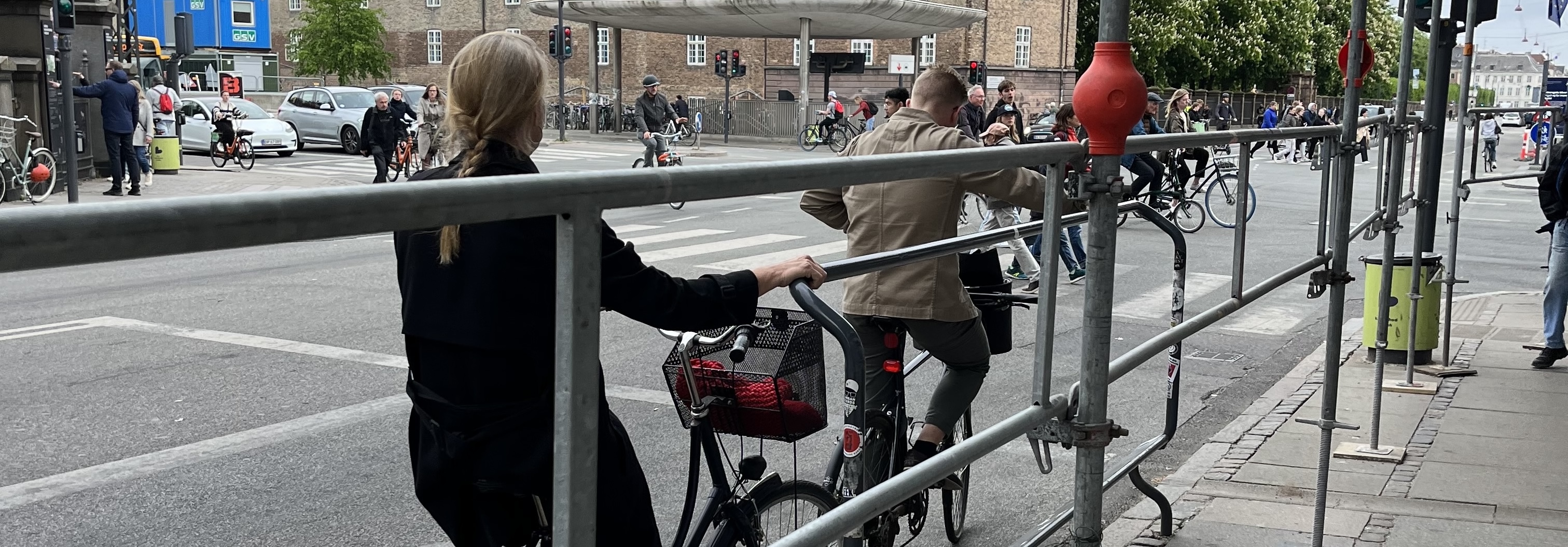
In May 2023, our family traveled to Denmark. I had recently turned 34, and this was my first trip to Europe. Meanwhile, my son was 1.5 years old. We were affording our child something our younger selves could’ve only dreamt of.
Countless areas of Denmark seemed designed specifically for families in mind, and even more, people seemed to help and accommodate children everywhere. The attendants at Copenhagen Airport ushered — literally, an attendant found us, brought us to a separate lane, and deposited us to the front. I thought we were in trouble, about to get robbed, or upsold some vip package. This service costs serious money in America — you'd have to be flying first-class.
There were highchairs in every restaurant. People ran over to assist us with our stroller on stairs, but it was rarely needed because the streets were fairly accessible. Family lanes in museums and event spaces allowed us to keep on whisking right through the lines. We felt like royalty and having a child didn't slow us down one bit; in fact, having him with us enhanced the entire experience.

Copenhagen was better than a spa day. Every block and neighborhood had something new to be seen (or eat). The streets felt safe to walk around and explore by foot for us adults and little ones, too. I could let my son off the invisible leash and breathe. Invariably, we’d run into another playground every block or so.
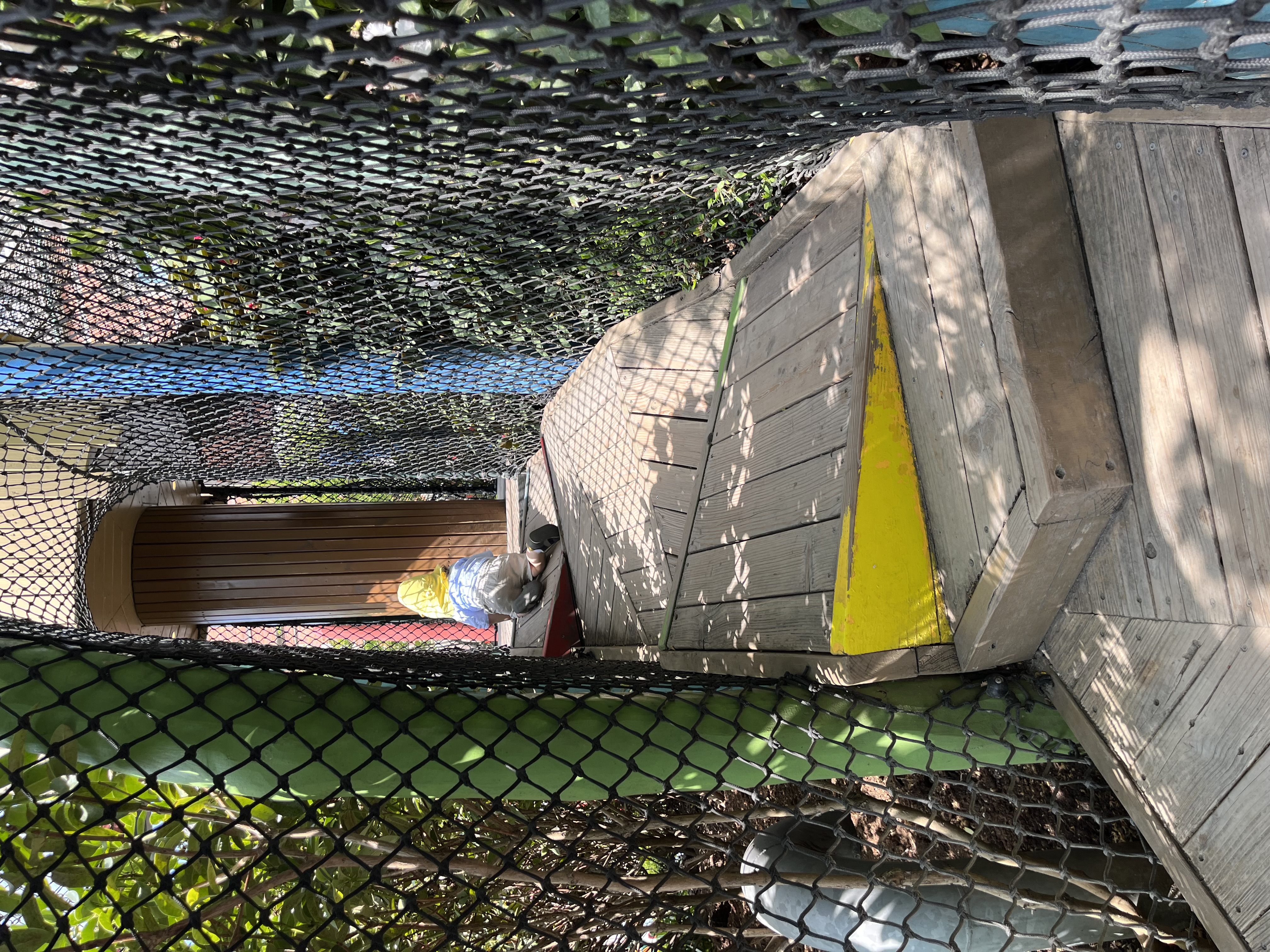
The Danish are famous for a kind of play and playground that many Americans would find horrifying. In fact, the concept of “Adventure” and “Junk” Playgrounds both have their roots in the Kingdom. Whether playing with hammers, knives, or climbing at frightening heights, by playing with risk the thinking goes that children learn to respect it. There's an emphasis on creative play with these everyday items, and helping them recognize limits. Parents are usually more hands-off — more trusting.
I came back to the States emboldened and excited to allow my son the freedom he enjoyed in Scandinavia. We hopped around our home city, played on playgrounds, and I let my little one do some leading — walking a bit ahead of us. Maybe we could bring a little bit of it back home?
This idea of children exploring on their own (even when parents or guardians are nearby) is seen as a novelty in much of the world — it makes for good TV. In fact, "Old Enough!" has aired for years and highlights Japanese and Canadian children walking around doing chores, picking up ice cream, and asking for help from shopkeepers near their homes. The show constantly highlights how our children are highly capable — we just need to trust them.
I wanted that for my son. We continued our stroll. Then, a woman approached our son and with total panic in her voice, yelled, "Has anyone seen this child's mother?" I was 25 feet away at this point. I calmly walked over, but the woman appeared aghast that I had let my child walk on their own this distance. The terror astounded me, as I was right there. Where one person saw negligence, I saw freedom and autonomy for my child.
Over two years have passed since then. In this time, my son has grown up a lot. He's tall for his age and able to converse with adults pretty well. Undeterred by this previous encounter, I wanted to empower my child to take on more autonomous tasks (with me close by).
Recently, I tasked him with going into a pizza shop and picking up our online order. I explained he would need to ask for three pizzas under the name "Sam." The only question he had was whether he could order a cannoli. I smiled and said, "Only one," as I handed him my credit card.
We rehearsed what he needed to say over and over again. Three pizzas. Online order. Pick up. Sam. Oh, and you want one cannoli. He was excited and ready to go — enough practice, dad! He looked down at the credit card with superpower-like awe.
Many minutes passed. I stood outside the shop, peeking in through the windows, not wanting to ruin the experience. He sat there at a table by himself, and the shop manager had given him a pad and pen to draw on. I could see that the order was ready, but he wasn't moving. I grew concerned.
My "Old Enough!" experiment seemed to be failing miserably. I aborted the mission. I walked in to find my son patiently waiting. However, another parent seated next to him whispered to me, "I don't think they took him seriously, so they didn't take his order."
I suddenly flashed back to my own childhood. I remembered walking into a bakery around five years of age, standing in line, and then being skipped entirely. I stood there with money in hand, unable to employ it, as other adults passed me by to place their orders.
There was my son, minding the credit card, pizzas remaining on the takeout rack, and a cannoli sitting undisturbed behind glass. History was repeating itself.
I invited him to place the order with me seated at the table. He was hesitant suddenly as this wasn't the script we practiced; eventually, he worked up the courage and ordered the cannoli. It wasn’t quite what I pictured, but he did it.
We expect something less of children — whether as a society or as parents, specifically. What I see in these moments isn’t an individual failing to listen to a child; rather, this is a reflection of culture today. When compared to more equal countries such as Sweden or The Netherlands, Americans struggle to trust each other. Only 55 percent of Americans say most people can be trusted. When you compare this to places like The Netherlands (79%) or Sweden (83%), the level of trust in each other is stark.
When we fail to trust one another or treat it like a coin flip, it trickles down to our children. We need to begin building it for ourselves and our children. They are more capable than we even know — or allow.